Negotiation with what’s already there ... no straight construction
22 April 2025 — ongoing

Introduction
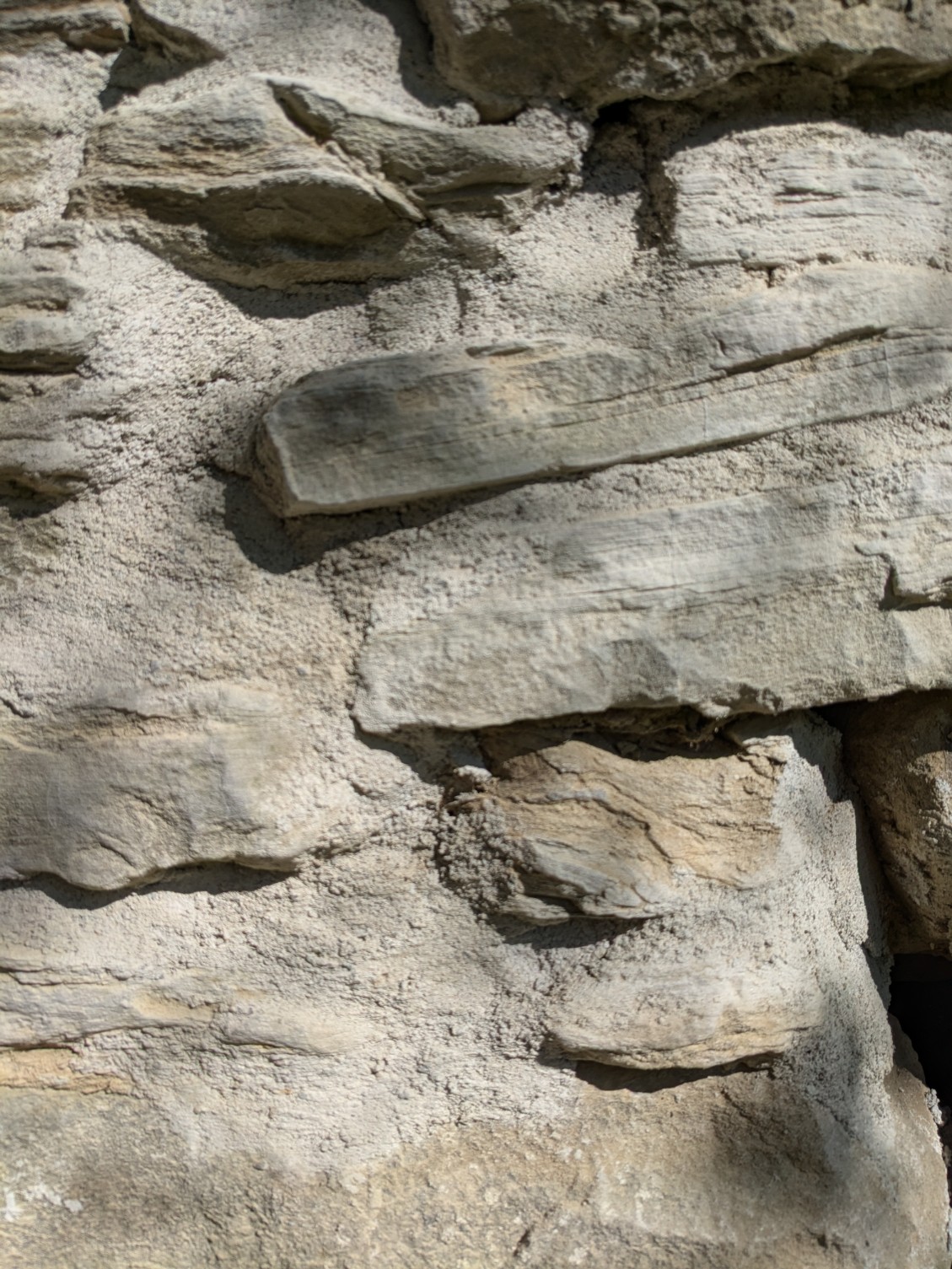
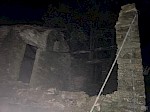
Judging from what I can observe, the ruin appears to have been constructed using a technique known as Muratura a Sacco. Unlike dry stone walling, this method consists of two outer faces with visible pointing, filled with a cavity of soil, clay, and smaller stones.
I've been asking around for a mason who could tell me more about this technique and have been pointed toward a few sources. To be continued.
In October 2024, one of the facade walls of the ruin collapsed. I had already spent some time clearing away the rubble to free up our trailer. Halve way through the rubble, what remains is a loosely stacked wall of stones, which I envision reusing at a later stage.
This time, I decided to practice the Muratura a Sacco technique myself—unguided—by repairing an old freestanding wall in our garden, facing the road. I also brought along the slaked lime I had prepared in Amsterdam a few months earlier, to experiment with lime pointing. This ties into an ongoing (and admittedly silly!) effort to stabilize some of what's left of the original structure.
Reflection (revisit)
* negotiation with what’s already there. no straight construction
* disrupting ecosystems for the sake of buying time?
* love the lime … not sure how to proceed … “fango” is the word, beneath my feet
* work with the “touwtje”
* this wall is not a monument … it’s an attempt. Still all of it is in it: care in the face of time, weather and collapse … keep listening
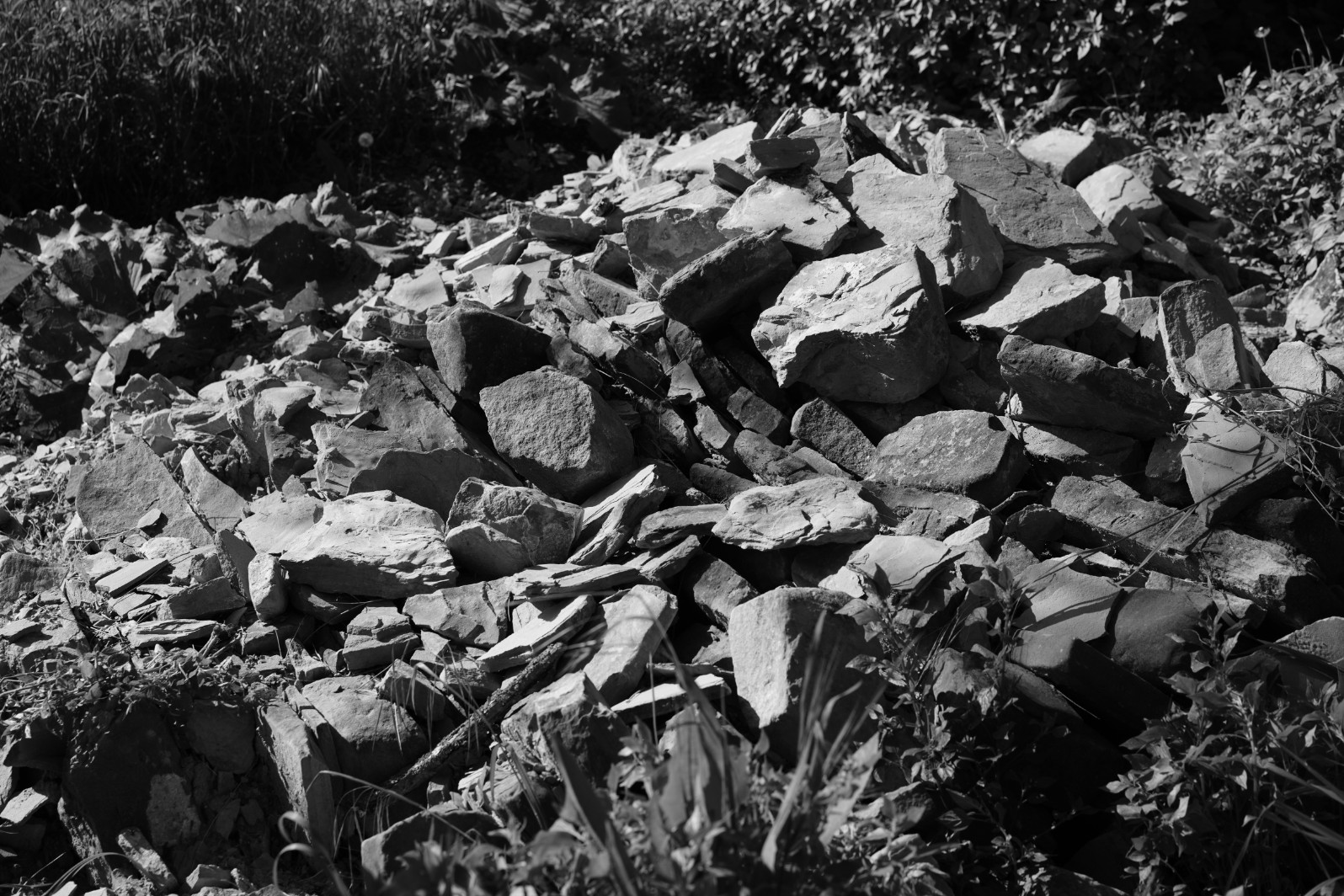
The pile of stones coming from that collapsed facade

A loosely stacked ... what exactly?

View from the wall on Google Maps (2011)
Notes
25 April 2025 4:35 pm
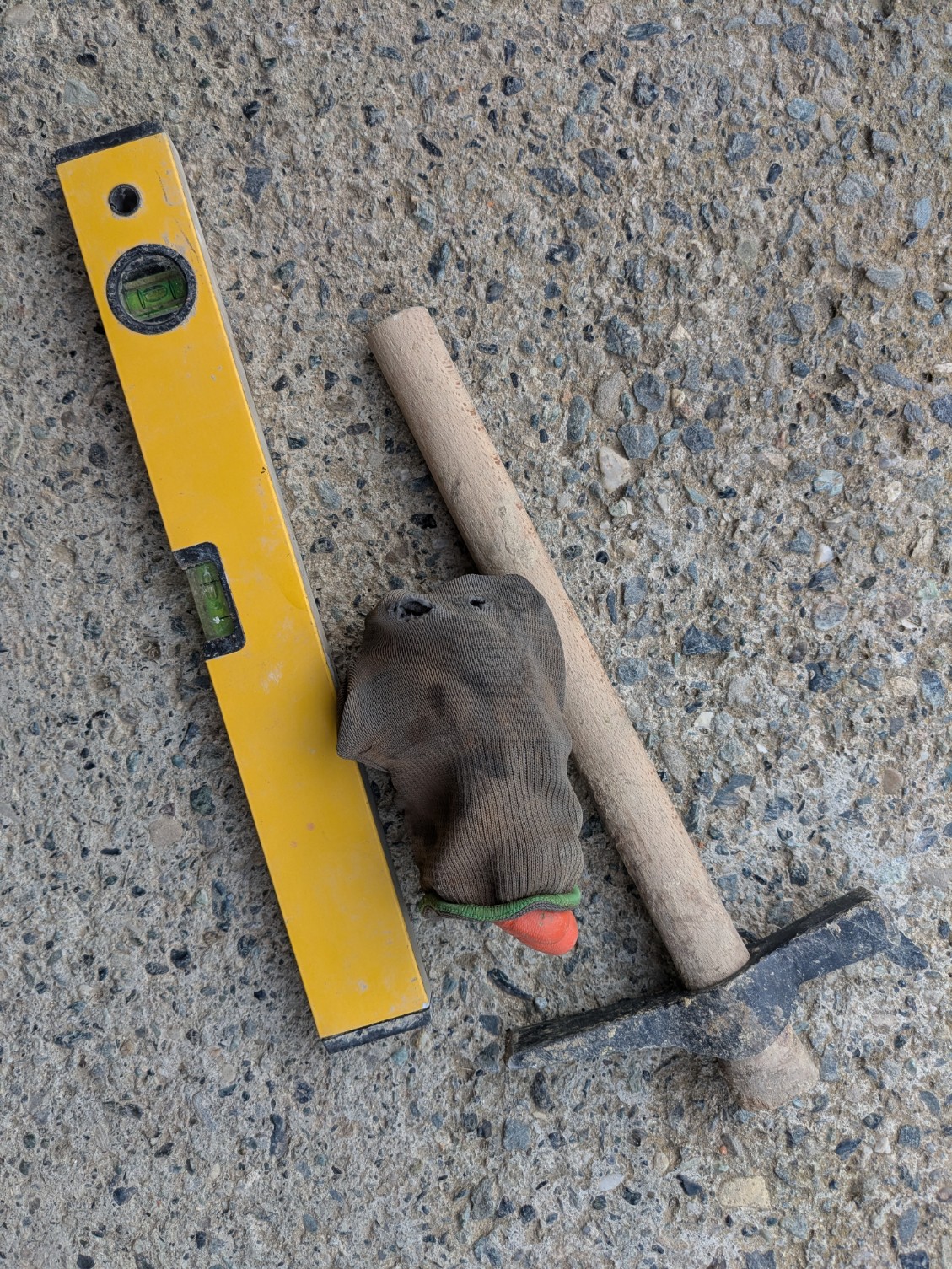
Day 3 (25 April, 2025) **Did** - Continued stacking stones. Paid close attention to placing small stones behind the visible ones to stabilize the structure — a critical step according to many YouTube videos studied. - Decided **not** to continue lime pointing (for now) - Started working with a *touwtje* (string line). Immediately it gave more reference, straighter lines in all directions. - GianCarlo passed by (for the second time) to see the work. He explained how to use clay (*fango*) — which, as it turns out, I can find everywhere on the property (eeehhhh). I think he enjoyed seeing me do this.


24 April 2025 4:34 pm
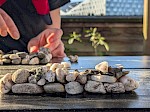
Day 2 (24 April, 2025) **Did** - Placed the corner stone - Connected inside and outside walls > Cleaning out means disrupting entire ecosystems — plants, animals, insects, seeds. > > > We all disrupt them. For what? > > Building for eternity? > > No — impermanence. > The repetitive puzzle of found stones feels very different from the predictable logic of cast clay bricks — like the clay brick wall we were also building inside the *stalla*. Look into how changes in building technology relate to shifts in mindset, process, and the epistemology of making, building, living.
22 April 2025 4:38 pm
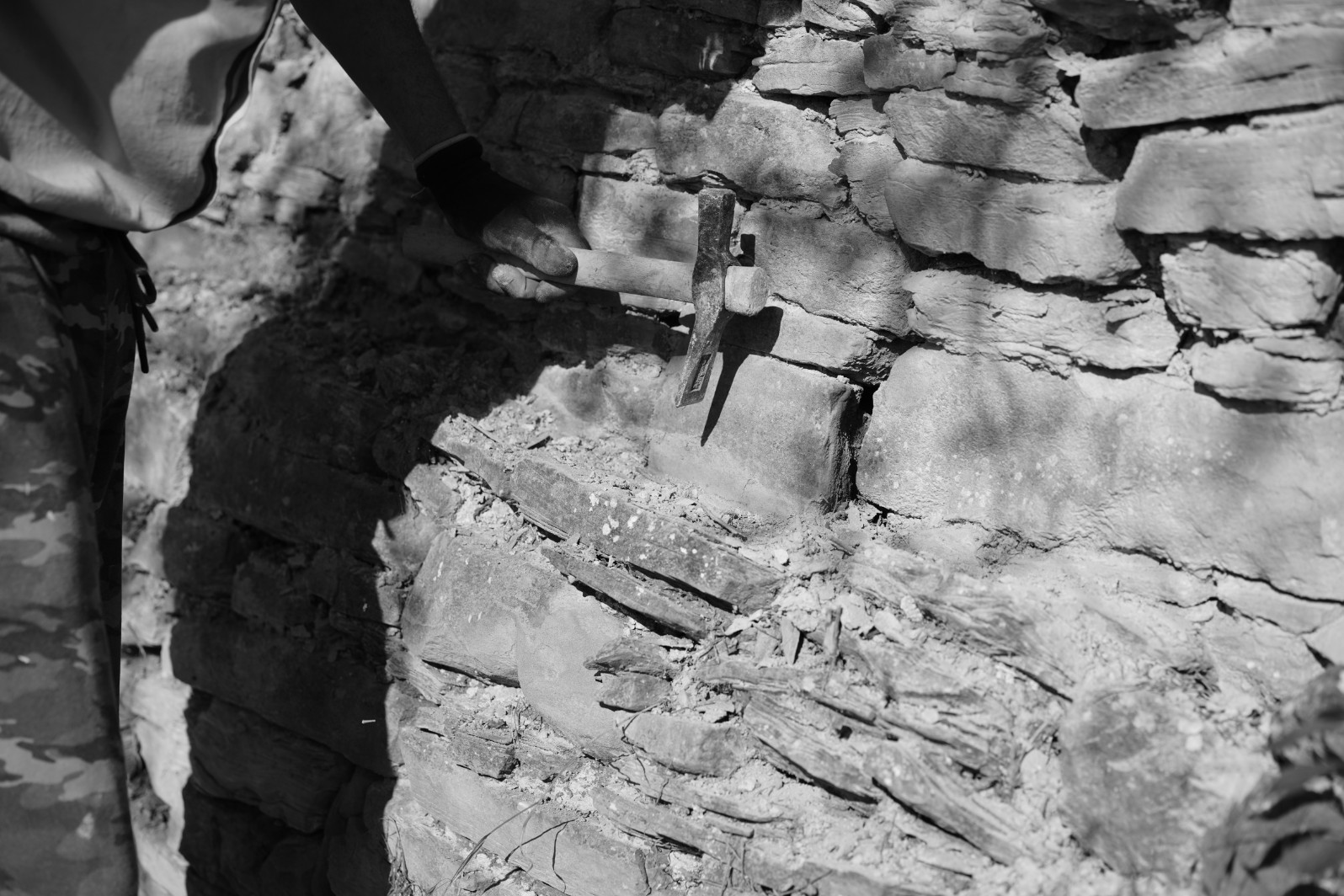
Day 1 (22 April, 2025) **Did** - Prepared the ground and wall underneath the remaining structure (digging) - Removed plants growing out of the wall - Dug clay and stone until foundation stones were revealed - Dry-stacked stones **Found** - Not easy, not difficult — very personal, like handwriting. Anyone can do this… skill grows with time. - Satisfying — mind focused on the puzzle - Random pieces fit surprisingly well **Next** - Determine where the wall should end / find the corner


22 April 2025 4:27 pm
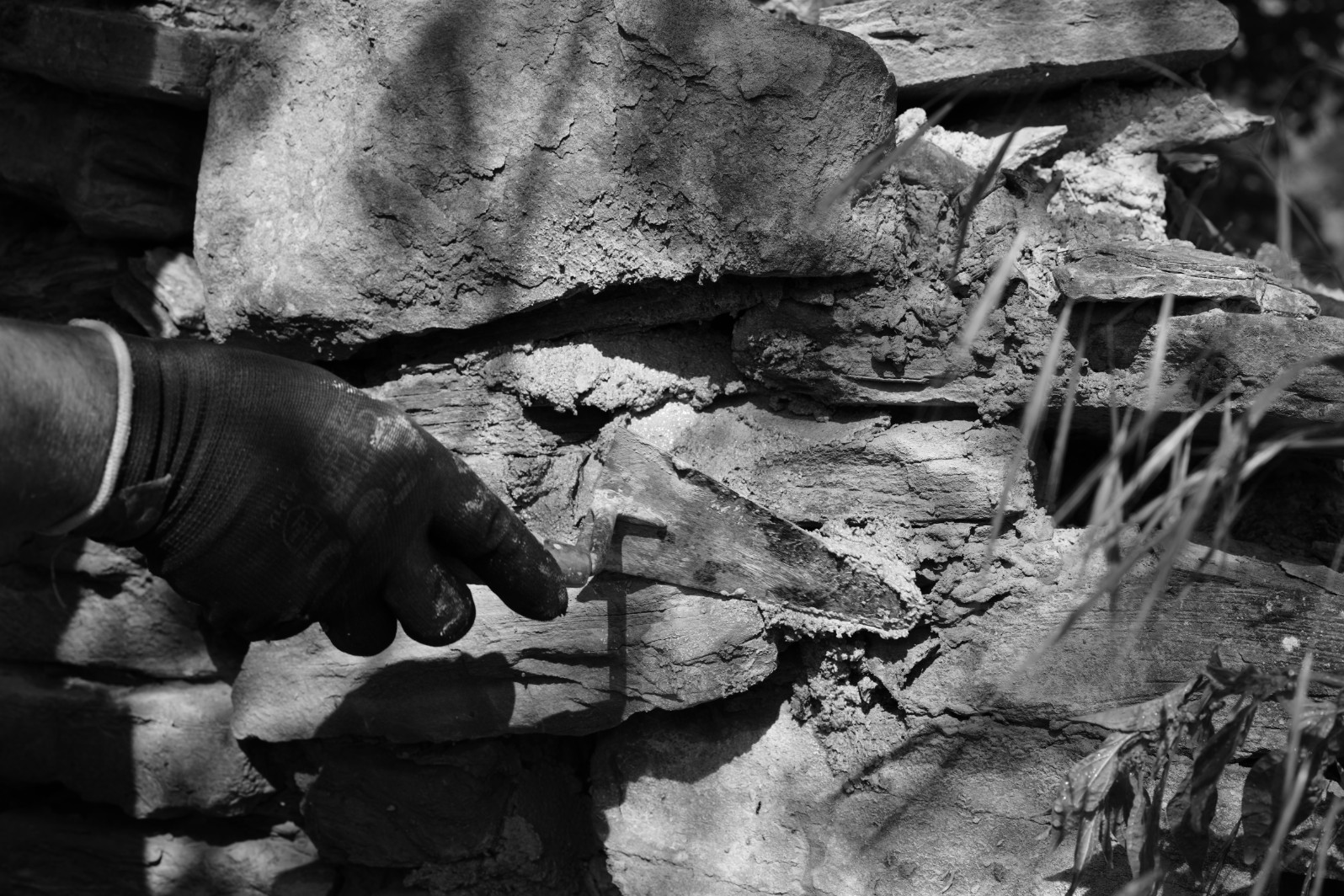
Calcio Pointing **Did** - Removed loose clay and rubble stones from the cracks by hand (~0.5m²) - Watered the remaining cleaned wall - Made a pointing bag from a piece of plastic - Mixed lime putty with sand (2:5 ratio), added water - Filled bag with mortar — bag broke - Continued with trowel - Filled joints and cleaned (again the next day) **Found** - Beautiful result — love the structure and tone; blends with the stone, unlike the grey, disjointed look of cement - Easy to apply and clean - Satisfying to know it absorbs CO₂ rather than emitting it > “A weird feeling of coming to the rescue — immortalising you, making you strong and solid and resistant again. Mixed with the melancholy of erosion, decay, impermanence, timing… mono no aware.” > **Ask** - Not sure whether to continue with lime. Local tradition seems to use clay/soil (fango, as GianCarlo told me). Ask Bruno, Luciano.